 10 cm
10 cm01 · Haft about 60 cm
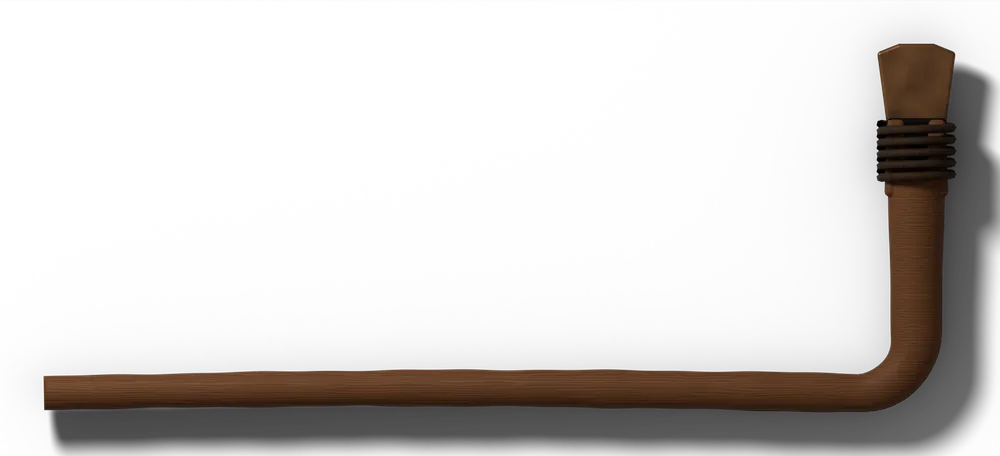
Copper axe
A trapezoid blade of 99.7% pure copper, cast in a mould and hammered, set in a forked yew haft with birch tar and bound with leather straps.
Known The only axe of its kind preserved intact. The copper came from ore mined in southern Tuscany, not the Alps. Wear shows it was used often and resharpened.
Argued Why his killer left such a valuable thing behind is still a mystery. Our case reads it as a sign this wasn't a robbery.
 10 cm
10 cm02 · 1.82 m
Yew bow, unfinished
A yew stave he was shaping into a new bow with his axe. It still needed rubbing down, polishing and a string.
Known Experiments with a model of the bow show it can kill from 30 to 50 metres away.
Argued Why he needed a new bow is unclear. His old one may have broken or been stolen.
 10 cm
10 cm03 · Length not given
Quiver and arrows
Deer hide, stiffened with a hazel rod. Inside: 12 unfinished arrow shafts and 2 finished arrows of wayfaring tree and dogwood, four antler tips and a 2 m bowstring.
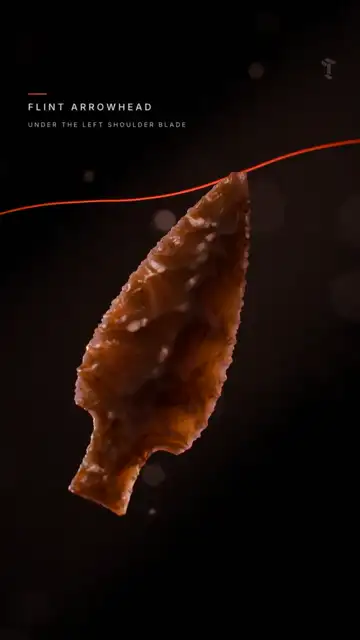
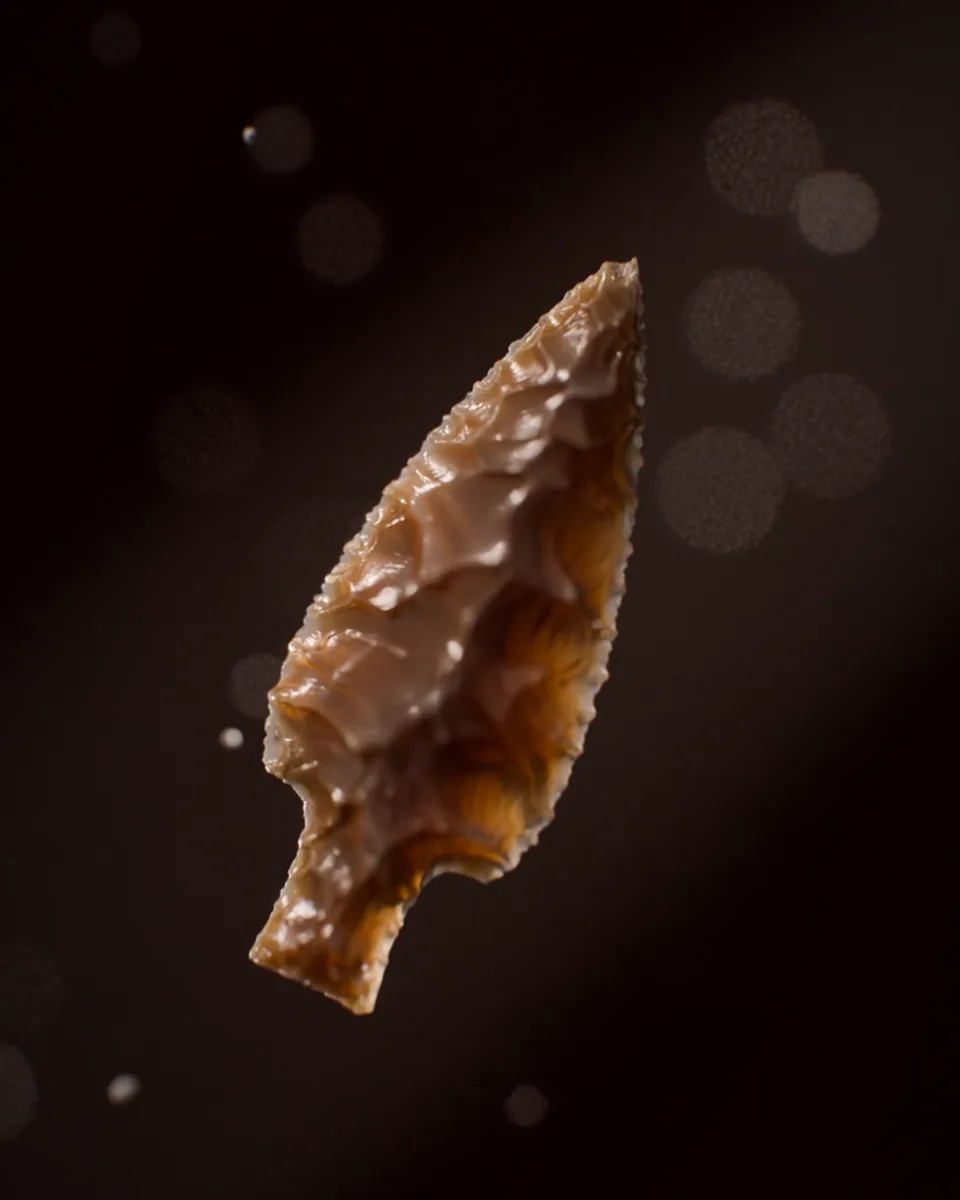
Known The two finished arrows have flint heads, bound on with plant fibres; the fletching is fixed with birch tar. The arrow that killed him came from behind; its flint head was found in his shoulder.
See his real flint, drawn ↓Rub the ice off the arrowhead ↑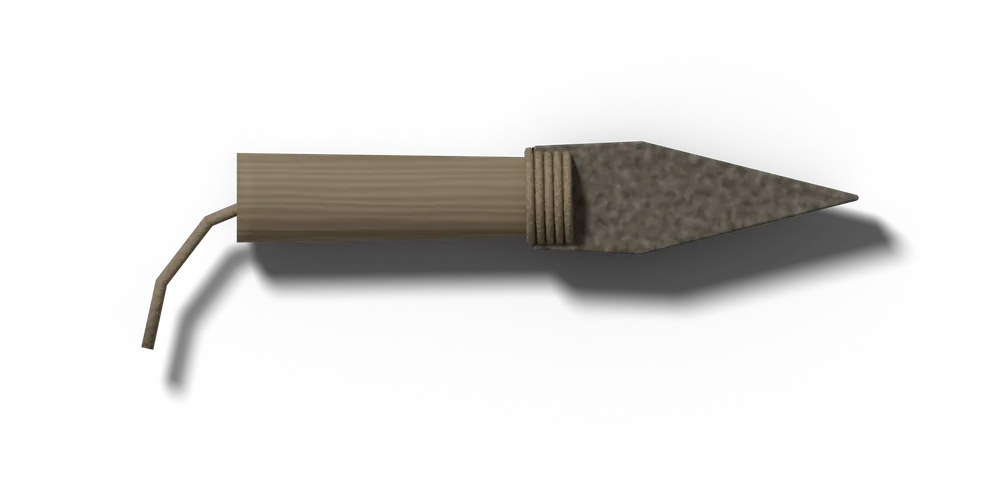 10 cm
10 cm04 · 13 cm
Flint dagger
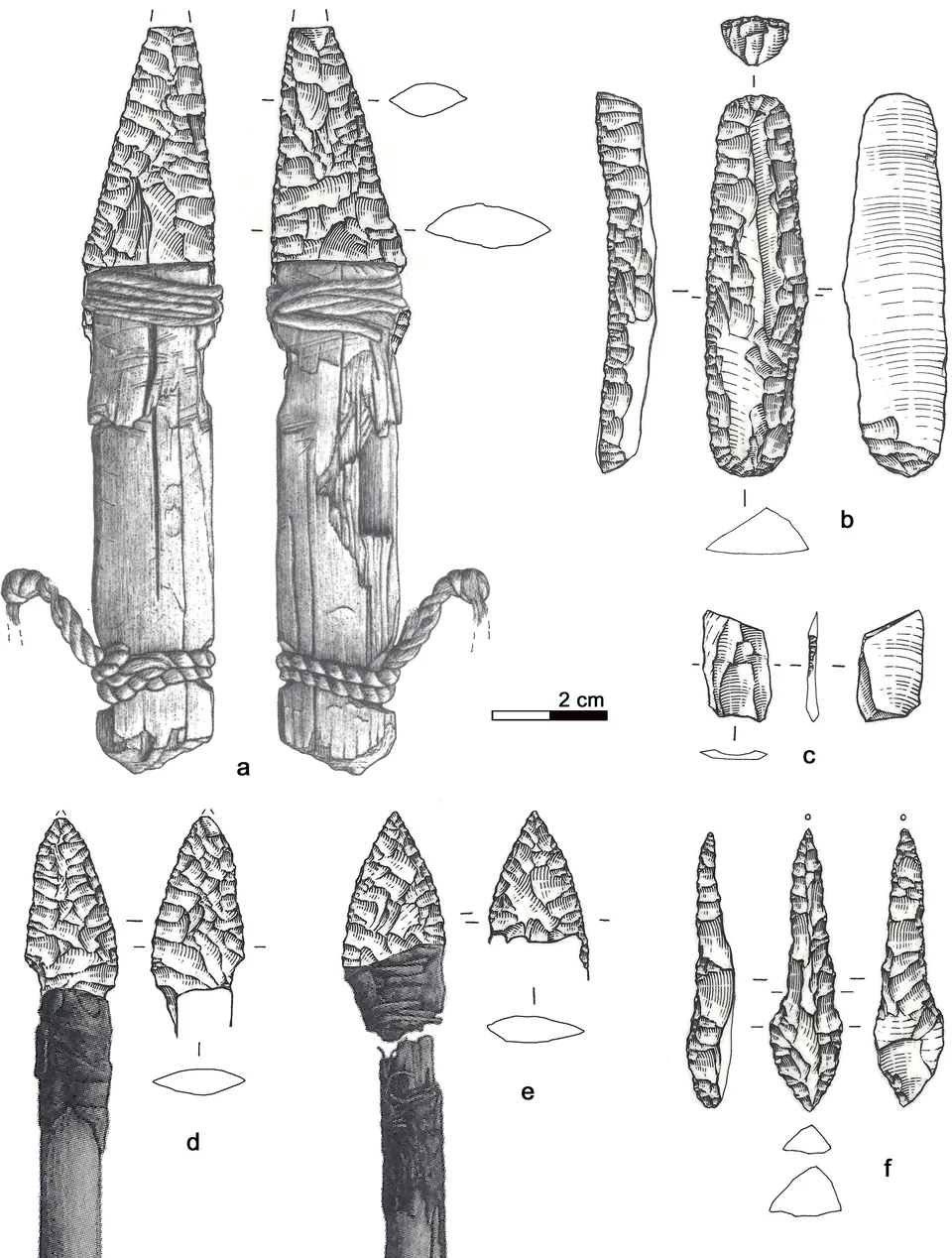
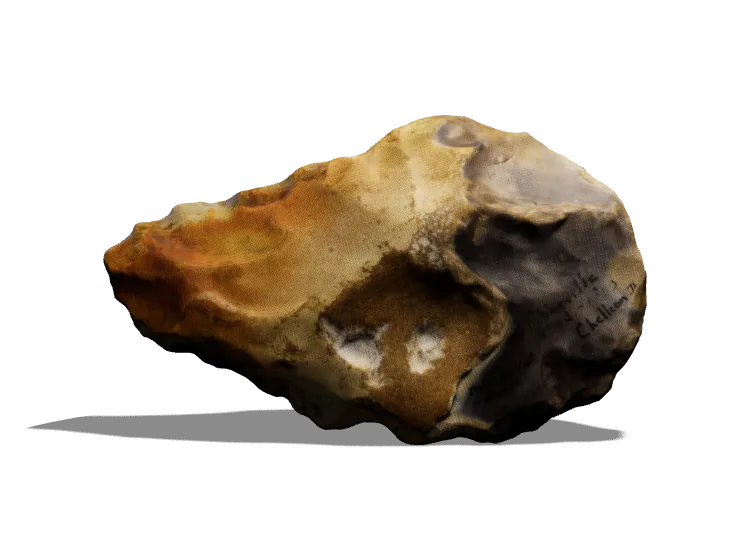
A flint blade forced into an ash handle and bound with animal sinew, in a sheath of lime bast.
Known The only fully preserved dagger from the Copper Age. Its flint came from Trentino. The blade is hardly bigger than an arrowhead, perhaps from being resharpened so often.
See his real flint, drawn ↓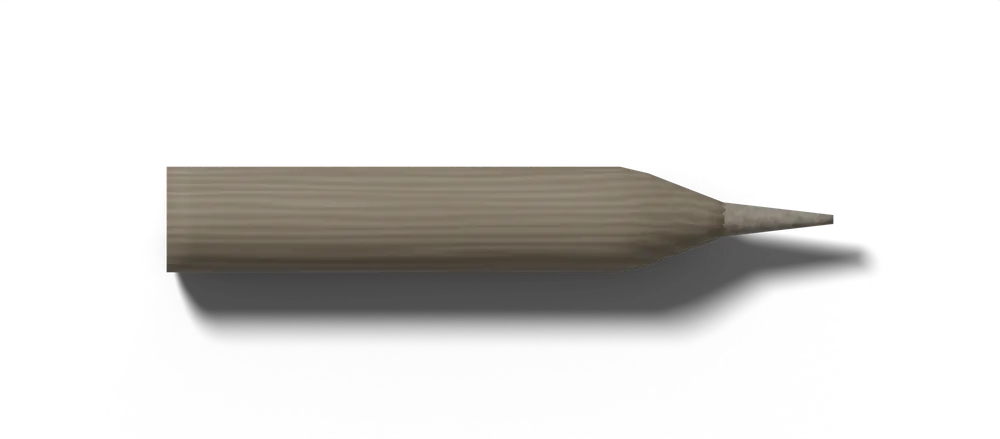 10 cm
10 cm05 · 12 cm
Retoucheur
A stripped lime branch sharpened like a pencil, with a piece of antler hammered into its core as the point.
Known He used it to shape and resharpen flint blades. The tool was unknown before he was found.
 10 cm
10 cm06 · About 20 cm high
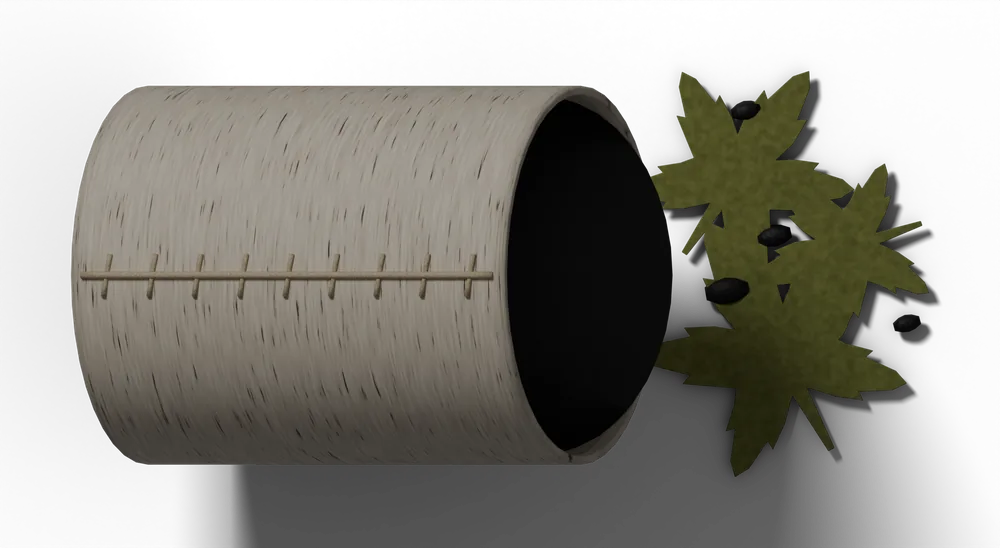
Ember carrier
One of two birch-bark pots, each made from a single piece of bark and stitched with lime bast.
Known Its inside was blackened, and it held freshly picked Norway maple leaves and pieces of charcoal.
Argued It is assumed he wrapped embers in the leaves and carried them in it, keeping fire for hours.
 10 cm
10 cm07 · Rod about 2 m
Backpack frame
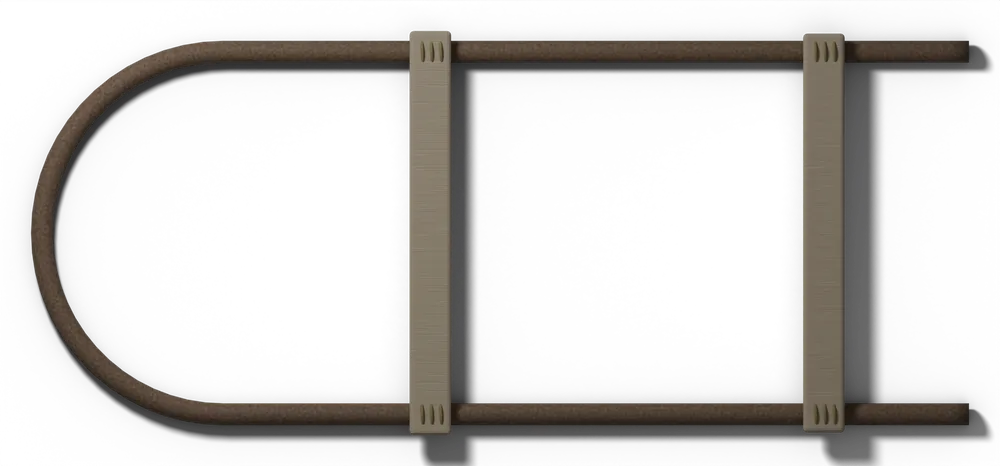
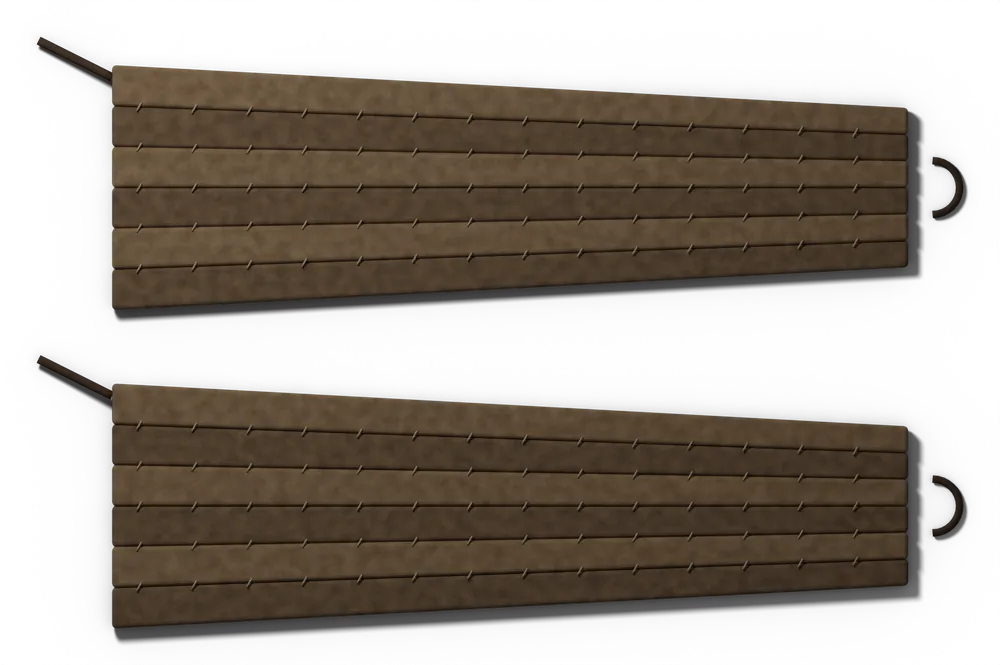
A U-shaped hazel rod and two narrow wooden boards, 38 to 40 cm long: the only parts that survive.
Known Wooden backpacks have a long tradition in the Alps.
Argued The frame probably carried a hide sack or a net, tied on with string.
 10 cm
10 cm08 · Leggings about 65 cm
Clothing
Leather, hide and braided grass only, stitched with sinew, grass and bast: a goat- and sheep-hide coat worn fur out, goat-hide leggings, a loincloth, a calfskin belt, deerskin shoes padded with grass, and a bearskin cap.
Known No wool or woven cloth was found. Seams in the coat had been mended with grass, probably by him.
Argued A woven grass mat found with him was first read as a cape. It is now thought more likely a mat against rain, or part of the backpack.